


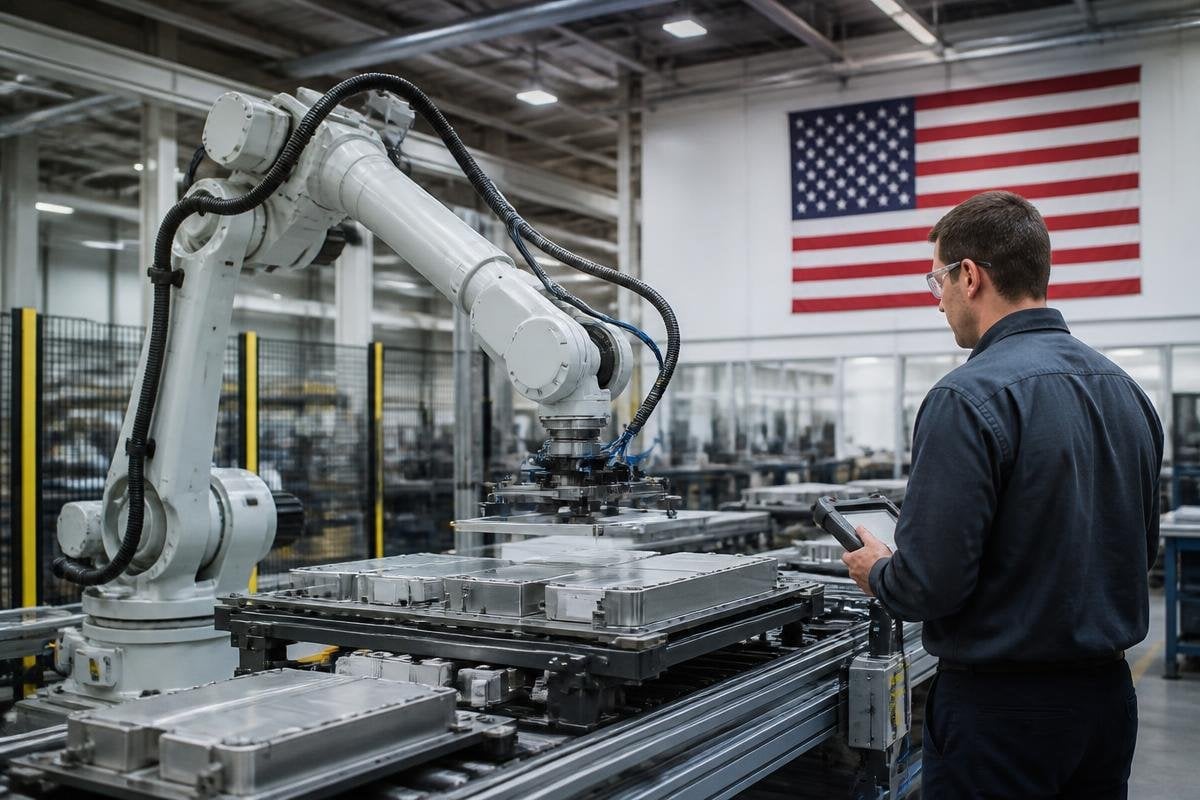
Automation can make local production easier to run, but it can’t fix high energy bills, weak supplier networks, or a shortage of trained staff. The useful question is narrower: which factory jobs can automation handle well enough to support production closer to the customer?
Quick read
- Robots fit repeat work with stable parts and clear safety rules.
- A local plant still needs people for setup, repair, quality checks, and planning.
- The business case depends on the whole production line, not the robot price alone.
Where robots can help
Industrial robots work best when the task repeats in much the same way each time. A robot arm can move parts, weld seams, apply adhesive, load a machine, or place items into trays. Sensors and cameras can help it adjust when parts arrive slightly out of place.
That repeat work matters because a factory can run more consistent shifts without asking people to perform the same motion for hours. It can also keep production running during late or overnight periods, as long as the cell has the required safety systems and someone is available to respond when it stops.
A robot cell is the full work area around the arm. It includes fixtures, software, sensors, guards, tools, and the equipment that feeds parts in and takes finished parts out. A low-cost arm with poor part handling can leave a line waiting, so the arm’s price gives only part of the answer.
What comes back with the work
Moving production closer to home brings more than a robot. A plant needs people who can program the cell, replace worn tools, inspect parts, fix faults, and change the line for a new product. It also needs suppliers for motors, controls, steel, plastics, packaging, and spare parts.
That is why automation can support local manufacturing without replacing the wider factory network. The robot may handle a repeat motion, while technicians keep the cell running and engineers adjust the process when the product changes.
The work also changes shape. Fewer people may stand at one station for a full shift, while more people monitor equipment, check quality data, and solve faults. Those roles need training, and a small factory may have trouble finding it locally.
The jobs robots still handle poorly
Robots struggle when parts vary a lot, surfaces are soft, objects arrive in random positions, or the task depends on touch and judgment. Picking a rigid part from a fixed tray is a clear machine task. Sorting damaged goods from mixed boxes is harder because the robot must see, grip, and judge each item.
Frequent product changes create another problem. A cell built for one part may need new grippers, fixtures, programs, and safety checks before it can make another. The changeover work can cost more than expected, especially for a small factory with short production runs.
That gap makes dated factory robotics reports from Robot24.com useful. They can tie a machine’s claimed labor savings to a named plant and its production task before the next section tests whether local output can pay for the cell.
The cost test for a local plant
A factory owner should compare the full production cell with the cost and risk of the current process. That means counting installation, programming, training, maintenance, floor space, energy use, safety equipment, and the time needed to stop production during setup.
The plant also needs a clear plan for faults. If one robot stops a whole line, the repair process matters as much as the arm’s speed. Spare parts, remote support, local technicians, and a safe manual mode can decide whether automation helps or creates another delay.
I’d back robots as one part of bringing selected production closer to customers, not as a stand-alone answer to offshoring.
A practical check before buying
Use these questions before choosing an automated cell:
- Task fit: Does the same motion repeat with parts that keep a similar shape?
- Changeover time: How long will the cell take to switch to the next product?
- Human work: Who will program, repair, inspect, and restart the equipment?
- Line effect: What stops if the robot or its feeder fails?
- Local support: Can you get parts, service, and training without long delays?
A plant that can answer those points has a better case for local automation. The next step is a small production trial with a measured task, a defined stop plan, and a clear check on part quality.
If the cell keeps working after the first product change, robots may help bring that product home. If it only works in a fixed demo, the factory still needs a different answer.
